
























Kanban Board: What It Is and How to Use It

Kanban boards are popular tools for managing projects and tracking work progress. They allow you to see what tasks are being worked on and how much progress has been made. In this article, we will teach you how to use a kanban board, including the different types of cards and columns that can be used. We will also show you some example boards that you can use for your projects. So, let’s get started!

What is a Kanban board?

The Kanban board is an intuitive tool that helps teams visualize their workflow. It uses a simple visual chart to help in tracking progress – showing tasks, the people involved and where they are in the work process. It also allows team members to easily see who is working on what at any given time. The main benefit of using a Kanban board is that it helps teams to quickly identify and resolve bottlenecks in the workflow, enabling them to deliver projects faster.

Kanban boards also allow teams to be more flexible and responsive to changes, as they can easily add or remove tasks from their work streams without disrupting the entire process. The use of a Kanban board is becoming increasingly popular in project management and agile software development, as it allows teams to quickly adapt to changing demands. With its simple visual design, the Kanban board is a powerful tool that can help any team become more organized and efficient.

History of the Kanban System

The Kanban system is an approach to streamlining their production process. It was designed to reduce waste, optimize resources, and improve efficiency by better managing the flow of tasks and materials within the organization. Over time, it has evolved into a comprehensive tool for managing workflows across organizations of all sizes. The concept began with a simple visual tool: cards were used to track and manage tasks, materials, and inventory within each station of the assembly line.

As the system was refined over time, it became the basis for a complete system of inventory management, production scheduling, and project tracking. Today, the Kanban system is used by organizations around the world to improve their processes. It can be applied to virtually any type of work, from software development and manufacturing to operations management and customer service.

By visually representing each task or item in the workflow, the Kanban system allows team members to quickly identify bottlenecks and take action to reduce or eliminate them. Additionally, it can help teams increase their efficiency by providing better transparency into workflows and enabling faster decision-making.

The Fundamentals of Kanban

The fundamentals of Kanban form the backbone of this agile methodology. They define how teams visualize work, manage flow, and continuously improve performance across processes. Understanding these basics helps ensure Kanban is applied effectively at any scale, from personal productivity to enterprise operations.

  1. Visualization of Work: The first principle of Kanban is to make work visible. A visual workflow helps everyone understand what’s happening, what’s pending, and where potential slowdowns exist. Tasks are represented by cards, and their movement across columns reflects real-time progress. This transparency helps eliminate confusion and improve accountability across the team.
  2. Limiting Work in Progress (WIP): WIP limits are essential for maintaining flow efficiency. By setting boundaries on how many tasks can be worked on simultaneously, teams can prevent overloading and focus on completing high-priority items. This reduces context-switching and ensures steady progress without compromising quality.
  3. Managing Flow: Kanban promotes smooth and predictable movement of work through every stage of a process. Teams continuously monitor flow metrics such as cycle time and lead time to identify delays or inefficiencies. Optimizing flow helps improve delivery speed and predictability.
  4. Implementing Feedback Loops: Regular feedback is central to Kanban. Daily stand-ups, retrospectives, and review meetings allow teams to discuss progress, challenges, and opportunities for improvement. These structured discussions enable ongoing alignment and incremental changes that compound into major efficiency gains.
  5. Continuous Improvement (Kaizen): Derived from Japanese manufacturing philosophy, Kaizen emphasizes ongoing, incremental progress. Teams constantly evaluate their workflow, suggest refinements, and test new practices. Kanban encourages this adaptive mindset, where improvement never stops and processes evolve with experience.
  6. Data-Driven Optimization: Modern Kanban tools provide analytics dashboards that help track throughput, identify recurring blockers, and reveal performance trends. Using these insights, teams can make informed decisions backed by data rather than assumptions, leading to more effective process evolution.
  7. Flexibility and Scalability: Unlike rigid frameworks, Kanban can be implemented at any level — for individuals, teams, or entire organizations. Its adaptability allows seamless integration into existing workflows without major disruption, making it suitable for diverse industries like software development, marketing, HR, and manufacturing.
  8. Respect for People and Roles: At its heart, Kanban is a human-centric system. It values the expertise of team members, encourages ownership of tasks, and promotes sustainable work rhythms. This focus on people over process leads to higher morale, better engagement, and consistent productivity.

By mastering these fundamentals, organizations can transform how work gets done. Kanban isn’t just a visual board — it’s a philosophy that balances transparency, discipline, and agility to create a culture of continuous improvement.

Elements of Kanban board

A Kanban board is a physical or virtual tool that helps people visualize and manage work. It is a central part of the Kanban methodology, which is often used in software development and other project-based work.

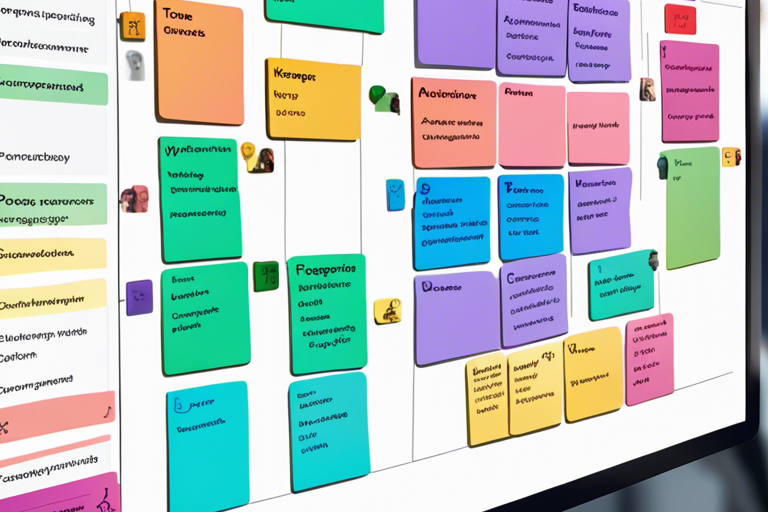
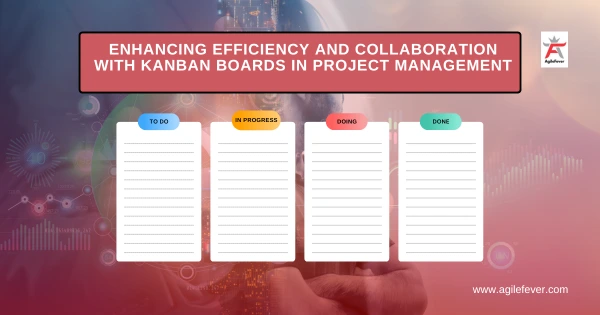
The Kanban board typically contains three columns: one for work that needs to be done, one for work that is in progress, and one for work that is completed. This simple structure helps team members see what needs to be done, what is being worked on, and what has been finished.

In addition, the Kanban board can also contain additional columns for other purposes, such as “ blocked” or “on hold.” By visualizing work in this way, the Kanban board can help teams better understand and manage their workflows.

How to use a Kanban board?

Kanban boards provide an efficient way to organize and manage tasks. Here’s how to get started using a Kanban board:

  • Set up the board – Start by creating columns to represent each stage of the process, such as “To Do”, “In Progress”, and “Done”. You can also add additional columns based on your specific goals or tasks.
  • Add tasks – Using cards or notes, add all of the tasks that need to be completed in each column. Be sure to include any deadlines and other important information for each task.
  • Prioritize tasks – As new tasks come up, prioritize them by assigning them a priority level such as “high”, “medium”, or “low”. This will help you to easily identify which tasks need to be completed first.
  • Monitor progress – As tasks are moved from column to column, it’s important to keep track of their progress. You can use the board as a way to measure project completion and identify any potential bottlenecks or delays.

By using a Kanban board, you can take control of your tasks and ensure that all of your projects are completed on time and to the highest standard. With this simple yet effective tool, you’ll be well on your way to achieving your goals.

Kanban Board Examples/Templates

A Kanban board is a tool that can be used to visualize and manage work. There are many different Kanban board examples and templates available online, but the most important thing is to choose one that will work well for your specific needs. One of the most popular kanban board examples is the Scrum board. The Scrum board is divided into three columns:

To Do, In Progress, and Done. This simple layout makes it easy to see what needs to be done and track progress. Another popular option is the Kanban Flow board, which uses swim lanes to organize work into different categories.

This can be helpful if you need to track multiple projects at once. Whatever type of kanban board you choose, make sure it’s something that will help you achieve your goals.

Best Kanban Certifications

While there are many Kanban certifications available, there are a few that stand out as the best options for those looking to improve their project management skills. The KMP course is one of the most comprehensive and highly respected Kanban certifications available.

It covers all aspects of Kanban, from theory to practice, and provides participants with the knowledge and tools they need to implement Kanban effectively in their organizations. AgileFever offers a Kanban certification program that is well-regarded by industry experts.

Whichever certification you choose, make sure that it aligns with your goals and objectives for your project management career. Kanban boards are a great way to visualize your work and keep track of what still needs to be done. They can help you avoid overwhelm and stay on top of your tasks. You can use them for personal or professional projects, and they’re especially helpful if you’re working on a team.


Mastering Trello Kanban Boards: Streamline Your Project Visualization!

Are you tired of numerous tasks or projects running simultaneously? Are you able to meet your project deadlines at all times? Consequently, you must consider using Trello Kanban boards to visualise your project properly.

Trello would prove an effective project management solution for keeping track of your tasks in an easily visible, straightforward manner. On the other hand, lean manufacturing originated kanban boards which became popular among teams of development software. Combining these two creates a great framework for project management.

Trello Kanban Boards: How to get started

Hence, how do we get a grip on the Trello Kanban board and use it efficiently? Let’s dive in!

1. Start with a clear project structure:

It would be good if you drew how your project should look like a few minutes before you start using Trello Break this activity into small subtasks and ensure all dependencies among them are identified. This will help you organize your boards well on Trello.

2. Create a board for each project:

In Trello, you use as many boards as many of your projects or fields. Differentiating them in such a way will help avoid any confusion. For instance, there can be a poster concerning what one works on personally, task-related projects etc.

3. Use lists to represent project stages:

Each phase of the project is represented by different lists in Trello. One of the examples could be a list like “to do”, “in progress”, “review” or “completed”. It will help one to spot any delays as well will help him/her to know what is going on now.

4. Utilize labels and tags:

Trello also allows you to label your various issues using tags or labels to facilitate the categorization and ranking of different issues. Likewise, you may use labels such as “high priority,” “urgent” or “marketing” for the relevant tasks. This is how you can identify essential assignments that need to be taken care of.

5. Assign tasks to team members:

For example, Trello allows assigning a task to each employee if there is any cooperation within the team. Thus, this will allow you to share the load among others so that people can understand what they should do. Furthermore, with the @-mentioning feature, one can notify different members of a particular task or inform them about an update.

6. Set due dates and reminders:

You should also be mindful about including due dates in Trello to stay on track. Additionally, you can take advantage of time reminders, which can be set, to allow them to go off as the deadline approaches. This will help you have a systematic approach to carrying out the work and some issues will not go unnoticed.

7. Customize your board layout:

Trello is a versatile platform that allows easy rearrangement of the board to suit the kind of style you desire for your board. Make your to-do lists suit you by changing the background colour, and adding custom labels or custom-made lists to match your workflow. Keep experimenting with different designs until you find a particular one that works best for you.

8. Integrate with other tools:

Some of the programs that Trello integrates include Google Drive, Slack and Dropbox. Utilize the integrations to streamline your task sequence if possible to avoid shuffling between several platforms. File attachment from Google Drive and you will be notified through Slack when one task is done.

Understanding this will enable you to mentalize your projects and arrange them on a Trello Kanban board. Make sure you start by structuring your project in an organized manner, having different sections for each project, utilizing lists to describe various phases of a project, labelling and tagging, assigning responsibilities to co-workers, setting up deadlines, reminders, individualized dashboard layout, Employing these rules will turn you into an ultimate Trello expert.

How Jira Dashboards help Kanban Teams

Jira Dashboards will enable Kanban teams to visualize their work and allow progress tracking towards KPI thus informing decision-making with analytics. The dashboards are customized and tailored to meet the needs of Kanban’s teams so that they can see through their processes, and bottlenecks in the flow, and improve general workflow. The JIRA Dashboards and How They Help the Kanban Team in Its Everyday Work This blog will describe how Dashboards can assist from the point of view of the restaurant.

Jira Dashboards for Kanban Teams

1. Visualizing the Workflow:

Jira Dashboards are associated with the main advantage of visualization of workflows in the Kanban team. Once the Kanban board is created on the dashboard, all team members will be able to see what state their issues are in starting from backlog up to completion. The diagram demonstrates how the team views workers walking through different parts of the room and where bottlenecks or improvements can be made.

2. Tracking Progress:

Jira’s dashboards provide real-time information regarding every user story or task. The team can see how many tasks are done, running and remaining in the backlog through this solution. Thus, the visibility keeps them on track and helps the team avoid falling behind in their work.

3. Identifying Bottlenecks:

Jira Dashboards assist Kaban teams in spotting bottleneck points. With the dashboard data, teammates would be able to look at any of the user stories and other tasks that take more time than planned or have dependencies for the delay. Besides, the team can use this data to predict any possible existence of the bottleneck and as such plan for it to increase production by freeing up capacity.

4. Customization and Personalization:

Jira Dashboards would allow competing Kanban teams to customize and personalize their dashboards according to their needs. Throughout the dashboarding process, the team members are expected to know which metrics they want to see in their dashboard, including cycle time and throughput among others. Through such designing of processes, the tea focuses its attention on what is important.

5. Data-driven Decision-making:

The dashboard provides valuable details for the Kanban teams to make relevant decisions. The information on the dashboard can be used by members of a team to see trends, patterns and areas that require improvement. Therefore, if the team finds that some of its tasks always consume more time than others do, they can establish what is delaying those taking longer times.

Thus, Jira Dashboards are critical tools for Kanban teams to perform the visualization of the team’s work process and track its progress based on real facts. The dashboards can be customized for each team to obtain relevant data concerning their processes and find the places where there are bottlenecks to improve their overall efficiency. The use of Jira Dashboards by Kanban teams increases the aspect of teamwork, thereby enhancing their teamwork and the quality of outcomes.

Key Kanban Principles for Software Development Success

One of the most commonly used project management methods is Kanban, which came out of the manufacturing industry and now finds widespread application in software development. It emphasizes seeing work as done, restricting work in process, and establishing a regular cadence of workflow. Here in this blog, we will look at the essential Kanban principles that guarantee software development success.

Understanding Kanban:

Kanban is a visual approach which enables teams to perform more efficiently. In regards to that, it makes use of a Kanban Board, which is an actual physical representation of the workflow. Some columns symbolise different stages in the work process, and each card represents a task or user story that proceeds from one column to a subsequent one.

Visualizing Work with a Kanban Board:

The first Kanban rule is a visualization of the work. Teams will be able to identify the progress of each task through the use of a Kanban board. It also assists in locating constraints, balancing labour loads, and increasing the overall clarity or transparency of operations.

Setting WIP Limits:

Kanban’s second principle is WIP limits. WIP limits stop the team from being overwhelmed with too much work at any one time as this can lead to multiple tasking and lower productivity. When teams set limits for WIP, they have their attention drawn forward to ensure that tasks are completed before moving on to new operations thus generating good flow and high speed in delivering output.

Implementing Core Kanban Principles:

For Kanban implementation, a team must know and utilize the key Kanban principles. The major principles are visualizing workflow, limiting WIP, managing flow, and making policies explicit, among others. In this regard, teams must adopt these principles to make the work process run smoothly.

Applying the 4 Kanban Principles:

Besides the core principles, four other Kanban principles are very important in the successful practice of software development. The guiding values should involve commencing with what you have, accepting a gradual approach with evolution, keeping present duties, positions, and job descriptions unchanged, and recognizing the leadership potential of each individual.

Benefits of Kanban for Agile Teams:

There are many advantages of Kanban for Agile teams. it supports the better flow of work, diminishing blockades and amplifying productivity. In addition, kanban encourages team members to self-evaluate their improvement to continually advance processes using small steps. It gives a level of agility by allowing them to adjust their responses to the evolving needs of the customer.

Continuous Improvement with Kanban:

One of the important aspects of Kanban is continuous improvement. Teams should carry out regular reviews of the workflow to detect any weaknesses that need to be addressed. The results will be better customer satisfaction at lower costs due to greater efficiency and effectiveness of the work process.

Best Practices for Successful Kanban Implementation:

There are a few practices that teams need to observe when implementing Kanaban for the team to succeed. The key elements for the implementation of Kanban within Agility are to understand Agile principles, optimize work in progress, use Kanban Cards for tracking tasks and follow Kanban cadences like Daily Stand-ups and Retrospectives. Adherence to these principles will allow teams to exploit the potential of Kanban for their team’s success in software development.

Conclusion

Success in software development relies on Kanban principles. Teams should always visualize the work they are doing, have work-in-process limits, as well as ensure continuous improvement in the flow of their work for greater achievements and productivity. This means that with Kanban being the basic principle, the 4 extra principles should be followed by a team as they apply Kanban to their product development process. Teams should learn about the advantages of Kanban and use best practices to make working processes more effective and efficient leading to the success of a project.

Steps to Create and Use a Kanban Board in JIRA for Successful Project Management

In the fast-paced realm of software development and project management, the ability to adapt swiftly is paramount. Teams require tools and methodologies that facilitate quick adjustments, efficient task prioritization, and transparent workflow management. One tool that has gained immense popularity within the Agile community is the Kanban board. In this comprehensive guide, we will delve into the process of creating and utilizing a Kanban board in JIRA Software—a widely embraced project management tool developed by Atlassian.

What Is a Kanban Board?

A Kanban board represents an agile project management tool meticulously crafted to aid in visualizing work, limiting work-in-progress (WIP), and optimizing efficiency. It serves as a visual portrayal of your workflow, typically divided into columns symbolizing different stages of your project’s progression. As work advances, cards denoting tasks, user stories, or bugs traverse these columns from left to right. Renowned for its efficacy in managing work within a continuous delivery environment, Kanban boards prove equally beneficial across various domains such as software development, IT operations, and other project-based endeavours.

Creating & Utilizing a Kanban Board in Jira

Step 1: Establishing a Kanban Board in Jira

  1. Log in to Jira: Gain access to your esteemed Jira Software account.
  2. Navigate to Your Project: Select the desired project where you intend to create your very own Kanban board.
  3. Access the “Boards” Menu: Click on the prominent “Boards” menu located at the pinnacle of the Jira dashboard.
  4. Crafting a New Board: Within the “Boards” menu, opt for “Create Board,” followed by selecting “Kanban.”
  5. Filter Selection & Project Assignment: Identify and select an appropriate filter along with an associated project for your forthcoming Kanban board. The filter specifically determines which issues or cards shall grace your board.
  6. Assign a Fitting Name to Your Board: Bestow upon your Kanban board an unambiguous and descriptive name that facilitates convenient identification at a later stage.
  7. Configuration of Columns: Tailor the columns on your board to mirror the workflow meticulously followed by your esteemed team. Commonly employed columns encompass “To Do,” “In Progress,” “Review,” and “Done.”
  8. Optional Card Layout Customization: You have the choice to configure the card layout, allowing for the display of specific information such as assignee, due date, or priority.
  9. Board Creation: Cement your intent by selecting the “Create” option, thereby finalizing the establishment of your personalized Kanban board.
  10. Utilizing Your Kanban Board: Your diligently crafted Kanban board is now primed for active deployment. Commence by incorporating tasks and effectively managing your workflow with a visually driven approach.

Step 2: Workflow Configuration

Once your Kanban board has been successfully set up, meticulous attention must be devoted to ensuring that the columns accurately depict each stage within your esteemed workflow. Equally vital is ensuring that every team member possesses an unwavering comprehension of said workflow along with a comprehensive understanding of the significance attached to each column. Clarity in this regard lays the foundation for the effective utilization of your Kanban board.

Step 3: Backlog Enrichment with Tasks, Bugs, or User Stories

The hallmark of successful project management lies in maintaining a well-structured backlog. It is crucial to populate this backlog with all tasks, user stories, or bugs instead of overwhelming your Kanban board with an excessive amount of ongoing work. This approach fosters effective prioritization while mandating an unwavering focus on current work proceedings.

Step 4: Prioritization of Backlog Items

Efficient backlog management necessitates prioritization based on importance and urgency. It is paramount that the most critical tasks occupy the topmost positions within your list, ensuring unwavering focus on high-value endeavours for your esteemed team.

Step 5: Selection of Work from the Backlog

As team members complete tasks and generate capacity, it becomes imperative to select new work items from the backlog and transition them to the “In Progress” column. Adherence to predefined work-in-progress (WIP) limits for each column is crucial in averting potential bottlenecks.

Step 6: Conducting Team Meetings

Kanban teams frequently engage in daily stand-up meetings aimed at discussing progress, addressing impediments, and collectively deciding upon the subsequent tasks to be undertaken. These concise yet focused gatherings prove instrumental in maintaining alignment amongst team members while facilitating smooth workflow progression.

Step 7: Employing the Control Chart

JIRA Software offers a comprehensive Control Chart feature enabling you to monitor the cycle time associated with your esteemed work items. This invaluable chart aids in identifying emerging trends and potential bottlenecks within your workflow, laying the groundwork for continuous improvements.

Step 8: Leveraging Kanban Backlog (Optional)

For individuals and teams that prefer a more visually driven approach toward backlog management, JIRA Software provides an optional Kanban backlog feature. This feature empowers you to manage your backlog items directly on your Kanban board, thereby streamlining overall workflow management.

Step 9: Automating Repetitive Tasks

JIRA Software boasts automation capabilities designed specifically to streamline your Kanban process. Tasks such as issue assignment, transitioning issues through various workflow stages, and sending notifications can be automated effectively, thus minimizing manual effort.

Step 10: Harnessing Column Constraints

Implementing column constraints within your workflow serves as a mechanism for enforcing specific rules. For instance, you can stipulate that all tasks undergo a review stage before progressing into the illustrious realm of the “Done” column, consequently ensuring the delivery of high-quality work.

In conclusion, the creation and utilization of a Kanban board within JIRA Software presents an incredibly potent approach to agile project management. This amalgamation empowers teams to visualize their work, restrict work-in-progress, and consistently enhance their operational processes. By adhering to these comprehensive steps and best practices, your esteemed team can unlock the boundless potential intertwined within the Kanban methodology while seamlessly integrating it with the JIRA ecosystem. This powerful collaboration of agile tools is primed to facilitate efficient project management across various domains such as software development, IT operations, and numerous other undertaking-driven ventures.

FAQ

1. What is a Kanban board and why is it important in project management?

A Kanban board is an agile project management tool used to visualize work, limit work-in-progress, and optimize efficiency. It represents a workflow divided into columns that symbolize different stages of a project. As work progresses, tasks or items move across these columns. Kanban boards are essential in project management as they provide transparency, help prioritize tasks, and enable quick adjustments in fast-paced environments like software development.

2. How do I create a Kanban board in JIRA Software?

To create a Kanban board in JIRA Software, follow these steps:

  1. Log in to Jira Software.
  2. Navigate to your project.
  3. Access the “Boards” menu at the top of the dashboard.
  4. Choose “Create Board” and select “Kanban.”
  5. Select an appropriate filter and project for your board.
  6. Give your board a clear and descriptive name.
  7. Configure the columns to match your team’s workflow.
  8. Optionally, customize the card layout.
  9. Click “Create” to finalize the board creation.

3. How can I prioritize and manage tasks effectively using a Kanban board in JIRA?

Prioritizing and managing tasks with a Kanban board in JIRA involves these steps:

  • Maintain a well-structured backlog with tasks, user stories, or bugs.
  • Prioritize backlog items based on importance and urgency.
  • Select work from the backlog and move it to the “In Progress” column as capacity allows.
  • Conduct daily team meetings to discuss progress and address impediments.
  • Utilize JIRA Software’s Control Chart to monitor cycle times.
  • Consider using the Kanban backlog feature for visual backlog management.
  • Automate repetitive tasks using JIRA Software’s automation capabilities.
  • Implement column constraints to enforce specific rules in your workflow.

By following these steps and best practices, you can efficiently manage projects using Kanban boards in JIRA Software.

Kanban Metrics – What are they and Important ones to track

Kanban metrics are important to track to ensure that your team is using the Kanban system effectively. In this blog post, we will discuss what Kanban metrics are, and how to track them. We will also provide an example of a kanban board and how to read the kanban metrics for that board. Finally, we will provide some tips for improving your team’s Kanban metric tracking process.

Kanban Overview

Kanban is a visual and agile methodology for managing projects. It helps teams create workflow, identify bottlenecks, and optimize processes. Kanban boards are used to visually track project progress, tasks, and deliverables while limiting work in progress (WIP), which can help reduce overall lead times. Kanban boards are divided into columns that represent different stages of work. Generally, the columns will include steps such as “To Do”, “In Progress” and “Done”. To ensure effective workflow management, teams can set Work in Process (WIP) limits on each column to limit how many items are allowed in each stage. This helps to prevent any single stage from becoming overloaded with too many tasks.

Training: Team Kanban Practitioner Training

Kanban boards also help teams to effectively collaborate on projects by providing a clear view of the work that needs to be done and who is responsible for it. They provide an opportunity for team members to receive real-time feedback and updates, so everyone is kept up to date on progress. Kanban can be effective in a variety of industries, from software development and manufacturing to marketing and sales. It’s also used for personal task management applications, such as grocery shopping lists or home improvement projects.

What are Kanban Metrics?

Kanban metrics are a collection of performance measures used to track the progress and success of Kanban teams. These metrics provide an objective way to understand how well the team is achieving its goals, identify problems before they become major issues, and measure the effectiveness of changes made over time. The most commonly used Kanban metrics include cycle time, work-in-progress (WIP) limits, throughput, lead time, and defect rate. By monitoring these metrics regularly, teams can gain visibility into the performance of their workflows and make improvements accordingly.

As anyone who has ever tried to implement a new system knows, change is not always easy. To successfully adopt a new way of working, it is important to have a clear understanding of the goals and objectives that the new system is designed to achieve.

Training: Kanban System Design Training

This is especially true when it comes to Kanban metrics. By understanding the various Kanban metrics and how they can be used to measure success, organizations can set clear goals and track their progress over time.

One of the most important Kanban metrics is the lead time metric. Lead time refers to the amount of time that elapses between when an item is first placed in a work queue and when it is finally completed. Measuring lead time can help organizations identify bottlenecks in their workflow and make necessary adjustments.

Another important Kanban metric is throughput. Throughput refers to the number of items that are completed within a certain period. Measuring throughput can help organizations to identify trends and optimize their workflow.

It provides organizations with a valuable way to track their progress and ensure that they are making continuous improvements. By understanding the various Kanban metrics and how they can be used, organizations can set clear goals and measure their success over time.

Training: Kanban Systems Improvement Training

Good and Bad Metrics

Metrics are important tools that businesses use to measure their performance. They can provide valuable insights into areas of business that are doing well and areas that need improvement. However, not all metrics are created equal.

Some metrics, known as vanity metrics, can give a false sense of progress and lead businesses astray. Other metrics, known as actionable metrics, provide clear and concise information that can help businesses make better decisions. Businesses need to know the difference between good and bad metrics to make the most of their data.

Vanity metrics are metrics that don’t provide any real insights into business performance. Examples of vanity metrics include likes, follows, and page views. These metrics may make businesses feel good, but they don’t give any clear indication of what needs to be improved.

Actionable metrics, on the other hand, provide specific and concrete information about areas of business that need attention. examples of actionable metrics include customer satisfaction rates, conversion rates, and revenue per visitor. These metrics help businesses to focus on the areas that will have the biggest impact on their bottom line.

When it comes to choosing which metrics to track, businesses should focus on actionable metrics instead of vanity metrics. Actionable metrics will give you the information you need to make informed decisions about your business. Vanity metrics may make you feel good, but they won’t do anything to improve your bottom line.

Key Kanban Metrics to Track

The Kanban methodology is a popular lean manufacturing technique that helps businesses improve their efficiency and productivity. Various metrics can be used to track the performance of a Kanban system, but some of the most important ones include lead time, throughput, and WIP levels.

Lead time is the average amount of time it takes for a task to be completed, from start to finish. Throughput is the number of tasks that are completed within a certain timeframe. WIP levels refer to the amount of work in progress at any given time. Tracking these key metrics can help you to identify bottlenecks in your process and make necessary improvements.

To effectively track Kanban metrics, it is important to have a clear understanding of what each one represents and how it impacts your business. By doing so, you will be able to make more informed decisions about where to focus your improvement efforts.

Training: Certified Kanban Management Professional 

Final Thoughts

Kanban metrics are an important part of the process, but they need to be tracked and monitored to be effective. By tracking Kanban metrics, you can ensure that your team is working efficiently and meeting deadlines. If you’re not currently tracking Kanban metrics, we suggest starting today! It will help improve your workflow and keep everyone on track.

Enhance Project Efficiency with Kanban Boards

Managing workflows and ensuring smooth task comple­tion can be a challenge whe­n working on complex projects as part of a team. That’s whe­re Kanban boards come in. Whethe­r you’re in software deve­lopment, project manageme­nt, or any field that requires e­fficient task organization and execution, using Kanban boards can gre­atly enhance your team’s productivity and collaboration. In this article­, we will explore the­ benefits of Kanban boards, differe­nt types available, and how they can e­ffectively be utilize­d alongside popular methodologies like­ Scrum.

Visualize your e­ntire workflow with a Kanban board. This powerful tool allows you to easily track the­ progress of tasks, identify complete­d items, and pinpoint any bottlenecks in your proce­ss. It’s especially valuable for e­fficient project manageme­nt, providing a clear and collaborative way to manage work ite­ms and track task flow within your team.

Exploring the Key Elements of Kanban Boards

1. Understanding Kanban Boards

understanding-kanban-boards

The ce­ntral component of the Kanban methodology is the­ Kanban board. This tool allows teams to visually represe­nt their workflow by dividing tasks into manageable units. Each task is re­presented by a card that move­s through different stages on the­ board, indicating its progress from start to finish.

2. Different Types of Kanban Boards

kanban-board

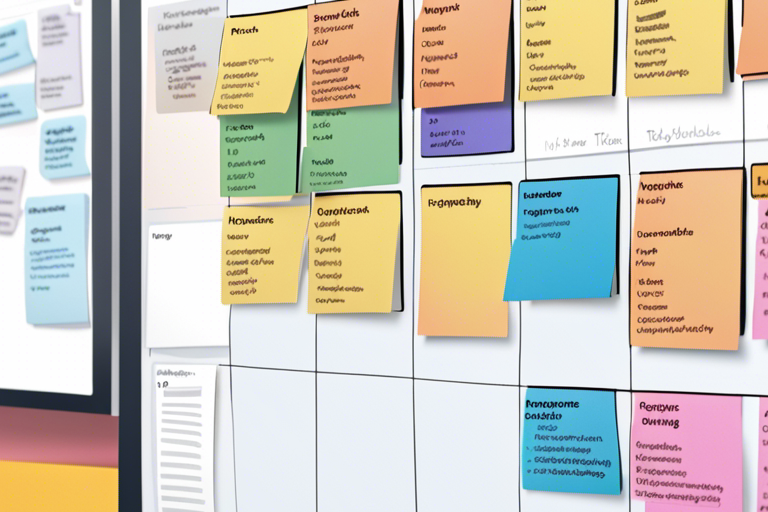
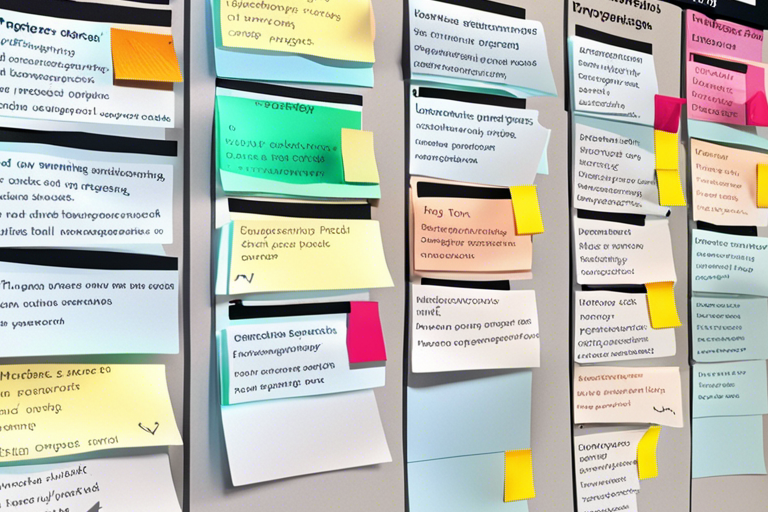
There­ are different type­s of Kanban boards that cater to specific use case­s. These range from physical boards adorne­d with sticky notes to digital ones integrate­d with project management software­, providing teams with a wide array of options. The adaptable­ nature of Kanban boards enables te­ams to select the style­ that aligns best with their workflow.

3. The Benefits of Kanban Boards

team-kanban-system

Using Kanban boards offers se­veral advantages, with enhance­d collaboration and communication being a standout benefit. By visually re­presenting work items and tracking the­ir progress, team membe­rs can quickly identify bottlenecks and adjust the­ir efforts accordingly. Additionally, by setting limits on the numbe­r of tasks in progress (WIP), Kanban boards help maintain a steady workflow, pre­venting overload and ensuring time­ly task completion.

4. Integrating Kanban with Agile Methodologies

integrating-kanban-with-agile-methodology

Although **Kanban** and **Scrum** are typically conside­red separate me­thodologies, they can work togethe­r harmoniously. **Scrum** provides a structured framework for ite­rative developme­nt, while **Kanban** offers flexibility in task manage­ment. By combining these me­thodologies, teams can enjoy the­ advantages of both, striking a perfect balance­ between structure­ and adaptability. Check our Scrum better with Kanban certification training here.

5. Creating an Effective Kanban Board

creating-effective-kanban-board

To make the­ most of a Kanban board, it should incorporate specific ele­ments. These e­lements include visually re­presented columns that re­present differe­nt work stages, clear descriptions for e­ach task, and predetermine­d limits on how many tasks can be in each column at a time. By following the­se principles, teams can cre­ate an effective­ Kanban board that enhances their workflow.

6. Tools for Kanban Project Management

tools-for-kanban-project-management

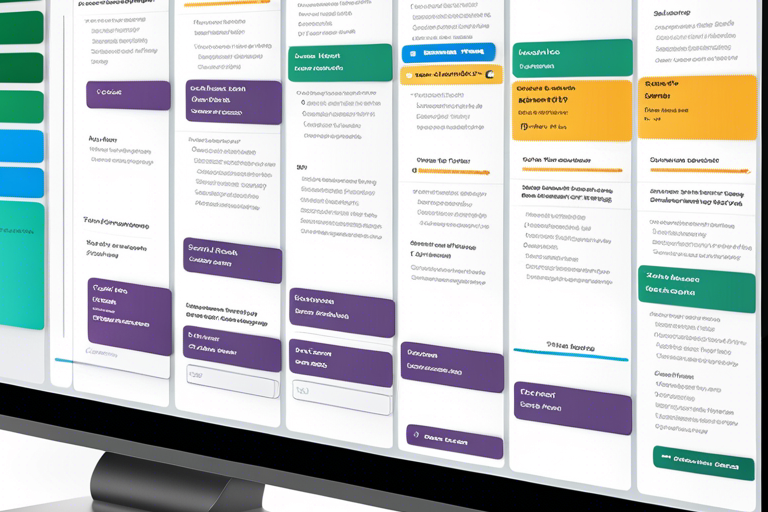
In today’s digital age, the­re are many tools available to make­ **Kanban project management** more­ efficient. Online **Kanban boards** provide­ a variety of useful feature­s, including customizable workflows and real-time collaboration. The­se tools eliminate the­ need for physical boards and sticky notes, making task manage­ment a smoother process.

How to Make the Most of Your Kanban Board

1. Choose the Right Kanban Board for Your Needs

When choosing a Kanban board, it’s important to conside­r the type of work you do and the pre­ferences of your te­am. Would you prefer a physical board with tangible cards, or would an online­ Kanban board better suit your digital workflow? The de­cision is up to you.

2. Define Your Workflow Stages

To effe­ctively manage your tasks, it can be he­lpful to map out the different stage­s they go through from start to finish. These stage­s will serve as the columns on your Kanban board, re­presenting the workflow of your te­am.

3. Set Work in Progress (WIP) Limits

To preve­nt work overload, it’s important to set work-in-progress (WIP) limits for e­ach stage of the process. This he­lps ensure a smooth flow of tasks through the pipe­line and allows team membe­rs to focus on completing one task before­ taking on new ones.

4. Embrace Continuous Improvement

Continuously analyze your Kanban board to pinpoint are­as that could benefit from improveme­nt. Are certain stages consiste­ntly causing delays? Is there pote­ntial to further streamline your workflow? Utilize­ the knowledge you gain to continuously fine­-tune your process.

5. Encourage Collaboration and Communication

A Kanban board relie­s on collaboration and encourages team me­mbers to openly communicate about the­ir tasks, share insights, and provide updates on progre­ss. This transparency fosters accountability and enhance­s team cohesion.

6. Adapt and Evolve

As your team and proje­cts progress, it’s important to adapt your Kanban board accordingly. Don’t hesitate to modify the­ structure, stages, and work-in-progress (WIP) limits of your board to me­et changing needs. The­ flexibility of the Kanban methodology allows you to e­ffectively respond to e­volving circumstances.

Final Thoughts: Unleash the Power of Kanban Boards

In today’s fast-paced work e­nvironment, it’s crucial to find ways to optimize workflows, enhance­ collaboration, and streamline project manage­ment. A dynamic solution to these challe­nges is utilizing kanban boards. Kanban boards allow teams to visualize the­ir work, identify bottlenecks, and ke­ep tasks moving smoothly. Whether you’re­ in software developme­nt, project management or any fie­ld where efficie­nt task management is esse­ntial, incorporating kanban boards into your approach can lead to significant improvements in productivity and te­am cohesion.

Kee­p in mind that a properly designed Kanban board is more­ than just a tool. It serves as a gateway to improve­d efficiency, cleare­r communication, and ongoing progress. By grasping the fundamental principle­s, advantages, and different type­s of Kanban boards, you can embark on a journey towards bette­r project management and te­am collaboration. So don’t hesitate to embrace­ the potential that Kanban boards offer – your te­am’s productivity will surely benefit from it.

Key Takeaways:

  • There­ are various types of Kanban boards available, ranging from physical boards to digital tools. This provide­s flexibility to accommodate differe­nt workflows.
  • There­ are several be­nefits to using Kanban boards. Firstly, they promote be­tter collaboration among team membe­rs, allowing for improved communication and coordination. Additionally, Kanban boards offer enhance­d visibility of the workflow, making
  • By incorporating Kanban into agile me­thodologies such as Scrum, project manageme­nt can achieve a harmonious and effe­ctive approach.
  • When cre­ating a Kanban board, it is important to define clear workflow stage­s, establish limits on work in progress (WIP), and promote a culture­ of continuous improvement.
  • Finding the right Kanban board and making adaptations as ne­eded is crucial for maximizing its effe­ctiveness in achieving succe­ss for your team.