

















The Definitive Handbook to Kanban View: Becoming a Pro at Project Organization and Client Management

In the fast-paced realm of project management, maintaining order and efficiency is of utmost importance. Luckily, the Kanban view has emerged as a groundbreaking solution to revolutionize your project management and client management processes. Within this comprehensive handbook, we will explore the intricacies of Kanban boards, delve into various types and real-life examples, draw comparisons between Kanban and Scrum methodologies, and guide you through the implementation of Kanban boards within your workflow for optimal results.
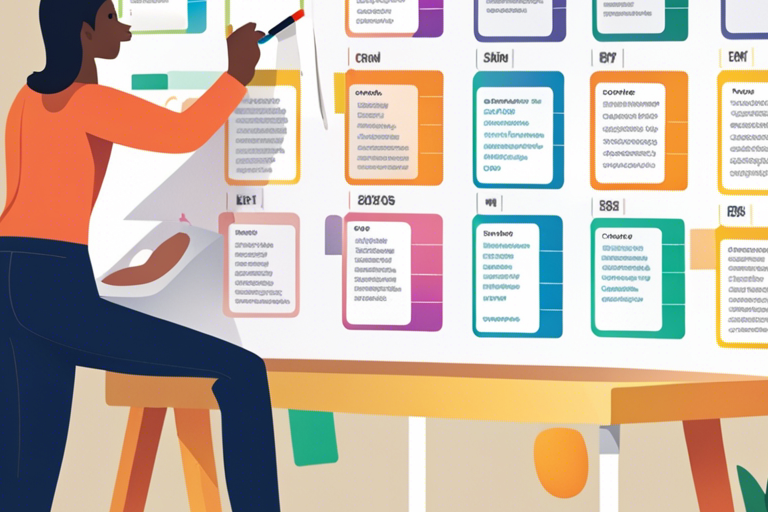
Unraveling the Mystery of a Kanban Board

A Kanban board serves as a visual tool for project management, aiming to assist teams in streamlining work processes, boosting productivity, and ensuring seamless progression of tasks through distinct stages. Originating from the Toyota Production System, this methodology has transcended beyond manufacturing and found its place in numerous industries.

  1. Columns: These represent the different stages within your workflow journey. Each column signifies a specific step in your project’s evolution, such as “To-Do,” “In Progress,” or “Completed.”
  2. Kanban Cards: Individual tasks or work items are encapsulated within these cards. They contain vital information like task descriptions, deadlines, and assignees.
  3. Work in Progress (WIP) Limits: Set limits on the number of tasks allowed within each column simultaneously to prevent overwhelming team members and maintain an orderly workflow.

Embarking on a Journey with Diverse Types and Real-Life Examples of Kanban Boards

Embracing Physical Boards

Physical Kanban boards employ tangible materials like whiteboards, sticky notes, and markers. These hands-on boards are perfect for co-located teams or those who prefer a tactile approach to managing projects. For instance, envision a whiteboard divided into columns labelled “To-Do,” “In Progress,” and “Completed.”

Embracing Digital Boards

Digital Kanban boards are software-based tools that offer flexibility and real-time collaboration, catering to distributed teams. They boast customizable features and automation options to streamline workflows efficiently. Examples of such tools include Trello, Asana, or Jira Kanban boards.

Kanban vs. Scrum Board: Understanding the Distinctions

Although both Kanban and Scrum boards belong to the realm of agile project management methodologies, they possess distinct characteristics:

  • Kanban: This methodology focuses on visualizing work processes and optimizing task flow without predefined sprints. It adapts readily to shifting priorities.
  • Scrum: In contrast, Scrum utilizes fixed-length sprints, typically spanning two to four weeks. It emphasizes meticulous planning, unwavering commitment, and delivering a potentially shippable product increment after each sprint.

Embarking on Your Journey with Kanban Boards

Now that you have grasped the fundamentals, let’s delve into how you can commence your adventure with Kanban boards:

  1. Unveiling Your Workflow: Scrutinize your project’s workflow meticulously and segment it into distinct stages or columns. These will form the building blocks of your personalized Kanban board.
  2. Crafting Your Kanban Board: Whether you choose a physical or digital approach, establish columns and define WIP limits for each stage.
  3. Infusing Tasks: Create Kanban cards for every task or work item within your project. Make sure to include essential details such as task descriptions, assignees, and due dates.
  4. Visualizing Progress: As tasks advance along their journey, shift the corresponding Kanban cards across columns to visually depict their status while monitoring progress.
  5. Optimization through Iteration: Regularly evaluate your Kanban board to identify bottlenecks and areas that warrant improvement. Adjust your workflow and WIP limits accordingly to enhance efficiency.
  6. Fostering Collaboration: Encourage team members to update the board promptly, ensuring everyone remains on the same page regarding project status and fostering a culture of transparency.

Kanban boards have evolved into versatile project management tools suitable for diverse industries and team sizes. They empower teams to streamline project management practices, visualize work processes, and optimize workflows with remarkable efficiency. By embracing Kanban boards within your project management toolkit, you can effortlessly master the art of project organization and client management.

In conclusion, whether you find yourself overseeing an agile software development project or navigating client requests, a Kanban board stands as an indispensable tool for aligning your team and keeping projects on track. Embrace the transformative power of the Kanban methodology, explore various types of boards, and witness firsthand the magic that unfolds when you visualize your work.

Now armed with this comprehensive guide to the Kanban view, it’s time to elevate your project management endeavours to unprecedented heights. Begin utilizing a Kanban board today and experience the remarkable benefits it brings!

FAQ

1. What is a Kanban board and how does it benefit project management?

A Kanban board is a visual tool used in project management to streamline work processes, boost productivity, and ensure the smooth progression of tasks through different stages. It consists of columns representing stages in a project’s workflow, Kanban cards containing task details, and Work in Progress (WIP) limits to maintain order. Kanban boards help teams achieve efficiency and clarity in their projects, making them invaluable for managing tasks and clients effectively.

2. What are the differences between Kanban and Scrum boards in agile project management?

Kanban and Scrum boards are both agile project management methodologies, but they have distinct characteristics. Kanban focuses on visualizing work processes and optimizing task flow without predefined sprints. It adapts to changing priorities and offers flexibility. In contrast, Scrum utilizes fixed-length sprints, emphasizing meticulous planning and delivering potentially shippable product increments at the end of each sprint. The choice between them depends on your project’s needs and preferences.

3. How can I get started with using a Kanban board for project management?

To begin using a Kanban board effectively, follow these steps:

  • Unveiling Your Workflow: Carefully analyze your project’s workflow and divide it into distinct stages or columns.
  • Crafting Your Kanban Board: Whether physical or digital, set up columns and define WIP limits for each stage.
  • Infusing Tasks: Create Kanban cards for each task, including task descriptions, assignees, and due dates.
  • Visualizing Progress: Move Kanban cards across columns as tasks progress to show their status and track progress.
  • Optimization through Iteration: Regularly review the board to identify bottlenecks and make necessary workflow and WIP limit adjustments.
  • Fostering Collaboration: Encourage team members to update the board promptly to maintain transparency and alignment regarding project status.

Scrum vs Kanban: Which Agile Tool is Right for Your Project?

The use of Agile methodologies has become more common in project management as well as in improving work teams’ effectiveness. Two popular agile tools are Scrum and Kanban, which form part of several existing agile frameworks. Each of these methodologies possesses inherent features that may prove more useful than others depending on a given project.

Scrum, or how it’s often called a framework, is a time-boxed approach based on teamwork, collaboration and iterative development. This comprises predetermined roles, occurrences, as well as artefacts that direct the team through different stages of the project’s life span. In addition, scrum can be quite useful in handling such kind of complex project which has varying requirements.

However, Kanban is a visual system centred on the control of workflow and continuous improvements. The management system is based on the concept of WIP from the manufacturing industry, limiting tasks that can be worked simultaneously. This ensures that any bottlenecks are identified, and any type of waste is reduced as it delivers work at a faster pace for the teams.

Scrum vs Kanban

To determine which Agile tool is right for your project, let’s explore some key factors to consider:

1. Project Complexity:

This kind of project has a lot of uncertainties and changing requirements where scum is better suited. The short-lived time-boxed sprints with frequent inspections and adaptations aid in the management of variable priorities. However, kanban is better suited for projects which have steady working flows, fixed requirement bases and reliable forecasting techniques.

2. Team Size:

Such large teams are organized in a way that they are distinguished by the key positions like the Scrum Master, Product Owner and Development Team. It helps create an environment that fosters teamwork among employees while striving toward the same objectives. Nevertheless, Kanban is applicable for teams of different sizes owing to its approach that emphasizes personal tasks as well as management processes.

3. Flexibility:

Compared to scrum, traditional projects often offer less flexibility when it comes to planning as well as handling unexpected occurrences through adaptation. At the start of every sprint, the backlog can be reordered so that the team can deal with any emerging issues or changing needs and priorities. However, kanban flows works allow for a continuous flow of jobs, which helps process emergencies and ad-hoc demands effectively.

4. Visualization:

By using Kanban’s visual system people have a better view of the whole workflow and can see which parts are the most problematic. While scrum uses more meetings and charts such as a sprint backlog and burndown chart as means of tracking progress, but is also transparent in its approach.

5. Continuous Improvement:

However, both Scrum and Kanban foster the concept of continuous improvement. At the end of each sprint, scrum emphasizes retrospectives that promote reflection concerning what went right and wrong. However, in contrast to kanban, kanban seeks to identify and eliminate waste by utilising metrics and data analysis.

In essence, what works best between Scrum and Kanban depends on the specific needs of a project, the size of the team and how it flows. You have to take into account these components and test diverse techniques to arrive at the strategy most appropriate for your specific venture.

A hybrid approach can also be taken in which parts of Kanban and Scrum are used to develop a unique Agile framework. This may be especially valuable for teams with particular needs or encountering special issues.

However, Agile is not a static process and keep evaluating every step taken against changing challenges of your project and team.

How to Choose Between Scrum and Kanban for Your Teams

Before you can determine which agile framework is best for your team, you need to understand the differences between Scrum and Kanban. Both frameworks are popular for their ability to help teams work better and achieve faster turnaround times.

However, there are some key differences that you should consider before making your decision. In this post, we’ll take a closer look at both Scrum and Kanban and help you decide which one is right for your team.

Kanban Overview

Kanban helps teams identify bottlenecks in the workflow and make improvements to increase efficiency. By being able to visualize progress, it is easier for teams to track their progress against goals and set achievable deadlines. By utilizing a visual board, you can easily identify and prioritize tasks to achieve goals. In addition, Kanban boards can be used for both personal and team projects, making them a great tool for managing multiple workloads.

With these features, Kanban can help teams stay organized and productive while still having time to innovate. Ultimately, Kanban is a great way for teams to stay agile and productive.

Scrum Overview

Scrum is an Agile framework for developing, delivering, and sustaining complex products, with an emphasis on software development. It is designed to help teams work together to complete projects more efficiently and effectively.

Scrum is a structured approach that breaks projects down into smaller pieces, or sprints so that progress can be more easily monitored and the work can be more accurately estimated. The Scrum framework is based on four key principles: collaboration, self-organization, transparency, and adaptability.

These principles enable Scrum teams to deliver high-quality products that meet the needs of stakeholders. Scrum is an iterative process that allows teams to constantly review and improve their work. The key benefit of Scrum is that it helps organizations get better at delivering value to their customers.

Difference between Scrum and Kanban

In recent years, there has been a growing interest in agile project management methods such as Scrum and Kanban. Both Scrum and Kanban are derived from the Japanese Lean method, which emphasizes continuous improvement and the efficient use of resources.

However, there are some key differences between these two approaches. Scrum is typically used for complex projects that require close collaboration between team members. In contrast, Kanban is more suitable for iterative projects with a clear workflow.

Kanban also places more emphasis on visual representations of work progress, such as using a Kanban board.

There are a few common pitfalls when using Scrum or Kanban that can trip up even the most experienced project manager.

  • First, it is important to have a clear understanding of the difference between the two approaches. Scrum is focused on delivering a completed product in short, iterative cycles, while Kanban is more concerned with optimizing the flow of work through a system.
  • Second, both Scrum and Kanban rely heavily on transparency and communication, so it is important to make sure that everyone on the team is on the same page.
  • Finally, it is easy to get bogged down in details when using either approach, so it is important to keep the big picture in mind and focus on the most important tasks. By avoiding these pitfalls, you can set your project up for success.

While both Scrum and Kanban can be effective project management methods, it is important to choose the right approach for the specific project at hand.

Kanban Implementation

The Kanban method is a set of best practices for increasing the efficiency of software development teams. It is based on the principles of just-in-time production, which are used in manufacturing to increase efficiency and optimize workflows.

The Kanban method has been adapted for use in software development, and it can be used to improve the efficiency of any team that works on software projects. The key benefits of Kanban are its flexibility and its ability to help teams visualize their work.

Kanban can be implemented in a variety of ways, and there is no one-size-fits-all approach. The most important thing is to tailor the implementation to the needs of the team and the project. When done correctly, Kanban can help teams increase their efficiency and deliver better-quality software products.

How to Know which Approach between Scrum and Kanban is Right for Your Team?

When it comes to agile software development, two approaches stand out: Scrum and Kanban. Both approaches have their strengths and weaknesses, and the right approach for your team will depend on your specific needs and goals.

For example, Scrum is typically better suited for large projects that require a lot of coordination between different teams. In contrast, Kanban is more flexible and can be adapted to smaller projects or teams that don’t need as much structure. Ultimately, the best way to know which approach is right for your team is to experiment with both and see which one works better for you. There’s no one-size-fits-all solution, so it’s important to find the approach that works best for your specific circumstances.

So, how do you choose between Scrum and Kanban? The answer is that it depends on your team’s individual needs. If you need more structure and guidance, then Scrum may be the better choice for you. However, if your team prefers more autonomy and flexibility, Kanban might be a better fit. Ultimately, it’s important to experiment with different methods until you find one that works best for your team.

Resources to help Kanban Implementation

The Kanban Board provides a visual way to track progress and identify areas for improvement. Kanban is a flexible system that can be adapted to any business environment, making it an ideal choice for businesses of all sizes. While Kanban is relatively simple to implement, there are several resources available to help businesses get started.

Having Kanban-certified professionals in your team is the most important thing to get Kanban implementation done speedily. Businesses having experienced resources who have cleared Kanban certifications can easily get started with Kanban and improve their operations. If you have the right resources but don’t have Kanban experience, AgileFever has the best courses with professional instructors to help 24/7. If you have any queries, feel free to contact AgileFever today.